The journal.
A magazine about paying strangers online, in ten departments: field notes, fine print, money mechanics, scam anatomy, a lexicon, case files, long reads, studio notes, buyer’s craft and interface.
Drip pricing: why the real price arrives on the last screen
A price that grows as you click is not an accident of design. Notes on how drip pricing works, why it persuades, where it hides on a checkout, and the habits that let you see the whole figure before you commit.
Read it
Reading a refund policy like a skeptic
A refund policy is a promise written in advance. Read it the way a cautious lawyer would: who decides, what counts, what gets kept and how long you wait. Here is a method that takes ten minutes.
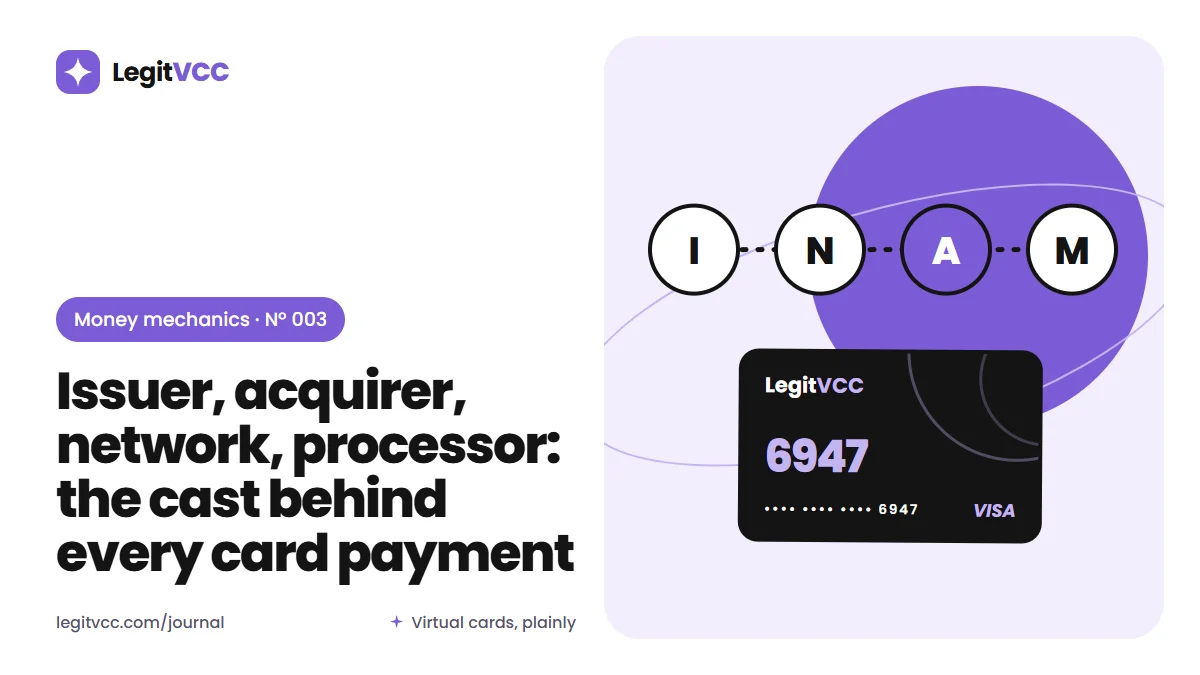
Issuer, acquirer, network, processor: the cast behind every card payment
A card payment looks like two parties, you and a shop. Behind the button there are at least four more, each with its own job, its own fee and its own say in whether the payment goes through. Here is who they are and what each one does.
The overpayment refund trick, explained step by step
Someone pays you too much, apologizes, and asks you to send back the difference. By the time their payment disappears, yours is gone for good. Here is how the trick works and how to handle any overpayment safely.
Float: money that is neither here nor there
Float is the money in between: sent but not yet received, paid in but not yet spent, counted by two people at once or by nobody. The word has followed payments from paper checks to virtual cards. Here is what it means and why it matters to you.
Case file: the shop that vanished between order and delivery
A hypothetical case. Noor orders a winter coat from a stylish online shop. The confirmation email arrives, the tracking number never works, and three weeks later the website is gone. We follow what happened, what evidence mattered and what would have changed the ending.
The first charge plates: metal tags, department stores and the idea of a card
Long before plastic, shoppers carried small metal tags and coins that told a store clerk who they were and that they could buy on account. The history of those charge plates explains a surprising amount about the card in your wallet. Here is the story, told carefully.
Why there are no star ratings on this website
Most shops put stars, quotes and customer counts near the buy button. We decided to put none of them anywhere on this site. Here is the reasoning behind that decision, what we show instead, and how you can judge us without a single star.
What an honest fee page looks like, and what a hiding one looks like
A fee page can inform you or distract you. These are the features that separate the two, with a side-by-side reading of what each kind of page says and what it quietly leaves out.
Confirmshaming: the "No thanks, I like paying more" button
A pop-up offers a discount. The button to accept says "Yes, save me money". The button to decline says "No thanks, I enjoy paying full price". That second button has a name: confirmshaming. Here is how it works, why it is used and how to recognize it.
Every app wants your phone number now. Here is why
Shops, apps and services ask for a phone number almost by reflex. Some reasons are good, some are commercial, and one is a security trade-off you should understand before you type the digits in.
Terms-of-service red flags you can spot in five minutes
You do not need to read every word of a seller's terms to learn something useful. A quick, targeted skim for a handful of clauses tells you how the seller thinks about risk, refunds and your rights.
Interchange: the fee inside every card payment that you never see
Every time you pay by card, a fee moves from the shop's bank to yours. You never see it, the shop rarely names it, and it shapes prices, rewards programs and surcharges all the same. Here is what interchange is, who sets it and why it matters.